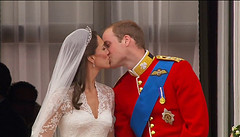
The media coverage of the greatest wedding of the 21st century (so far), compressed to 1.5 minutes by MSNBC. Great footage, especially the one inside the cathedral, shot from above the altar. The audience of the wedding was absolutely staggering, more than 2 billion people watched the ceremony. It was, according to Wall Street Journal, the ultimate reality show.
An estimated two billion TV viewers will see all or part of the coverage of Prince William and his longtime girlfriend Kate Middleton exchanging vows at Westminster Abbey. Add an expected 400 million for online streaming and radio and the number swells to nearly 35% of the world’s population. An additional 800,000 observers likely will crowd outside Buckingham Palace the day of the event, many of them tweeting and Facebook posting and shooting video with their phones.
In 1981, the U.S. was still largely a three-network nation. Cable was in its infancy, VCRs even younger. There was no Internet, virtually no cellphone technology, no social media. In the U.K. BBC1 began the wedding day with a “Tom and Jerry” cartoon. Tweets was the name of a band on the U.K. charts with a hit called “The Birdie Song.”
The explosion of new media options will be put on vivid display, even as the main event will still consist of chiming church bells, choreographed kisses and pastel feathered hats. For something that will take only six hours, broadcasters and cable channels are finding hundreds of ways to slice, dice and piggyback on the big event with reality shows, documentary specials, and at least two made-for-TV cable movies.
Visit msnbc.com for breaking news, world news, and news about the economy
