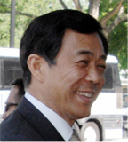

Chinese cyberspace and social media are rife with rumors about a lingering or barely averted coup. The rumors are associated with the recent sacking of an important provincial Party secretary, the Congqing boss Bo Xilai (see details). The scion of a party clan with roots in the Mao era, Bo Xilai was sacked for aggressively pursuing the Nouveau Riche and “gray market” networks in China’s “Wild West” capital on the upper Yangtze, Congqing. He is also suspected for meddling with the order of succession to the Chinese presidency. According to Los Angeles Times, quoting a Chinese language news portal based in the US, “Bo had been scheming with Zhou to prevent vice president and heir apparent Xi Jinping from being confirmed as President Hu Jintao‘s successor.” Xi Jinping, who has spent a good number of years in the US as a student, represents the more liberal, market oriented wing of the party. Bo Xilai represents a wing that seems to yearn for the good old days of Maoist social security and for the proverbial “iron rice bowl”.
With Bo Xilai also seems to have gone down the all powerful Zong Yongkang, the party official in charge with purging or promoting national upper tier party activists. Zong is an influential member of the Political Bureau Standing Committee, China’s most important political forum with real power representing the “inner party.“ His position is similar to that of Stalin’s aids at the height of Soviet Communism: Malenkov, Beria, or Kaganovich.
In a tangible proof of major convulsions at the very top of the Chinese Communist Party, on March 21 searches on Chinese the Baidu search engine for words such as “June 4”, associated with the pro-democracy movement of 1989, have produced real links, acknowledging the events. Furthermore, the “first item was about Wen Jiabao wanting to give the event a political rehabilitation” according to Epoch Times, an online and print publication believed to be associated with the religious movement Falun Gong, currently banned and persecuted in China. Typically, such searches return nothing or results of no political consequence. On March 21 the Chinese censors seem to have relaxed their grip on the search engines.
More about the Chinese political developments surrounding Bo Xilai
- China’s leadership shakeup: Bo Xilai and 4 other names to watch (csmonitor.com)
- Rendezvous Blog: New Details Emerge of Bo Xilai’s Removal (rendezvous.blogs.nytimes.com)
- Chinese politics: The sacking of Bo Xilai (economist.com)
- Bo Xilai speaks on deputy scandal – BBC News (bbc.co.uk)
- China ties Bo Xilai to police inquiry involving his family, sources say (vancouversun.com)
- Has There Been An Attempted Coup In China? (1oneday.wordpress.com)
- 18 Died in Chongqing from Persecution During Bo Xilai’s Reign (1oneday.wordpress.com)
