Data Science

Sociometers: a new way to quantify social interactions

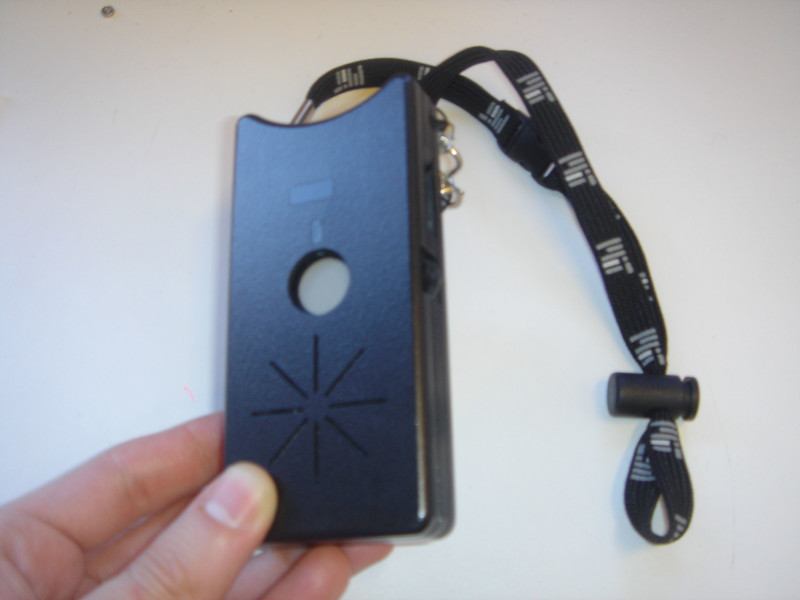
Sociometric Badge
Sociometer – MIT Media Lab. Human Dynamics Group

How about a Fitbit for social interaction? Instead of measuring steps and calories, such a device measures proximity of others and verbal interactions. The device communicates with similar units to determine social distance from other individuals and microphones to capture verbal interactions. Pioneered, among other places, at MIT, such devices bring wearable computing to social scientific research. An interdisciplinary team reported in Nature that sociometers reveal that women in small collaborative groups are more physically proximate to other women. In other contexts men and women did not show any differences. The results sound a bit underwhelming, but the technology promises some interesting overtures, especially for reopening the fascinating field of proxemics, pioneered by Edward T. Hall. Now we can finally find out how large and elastic are the bubbles of privacy and how social interactions vary across micro-cultural groups.

Reference papers

244943 {:MWADNZEF},{:4PUFCH7P},{:UN3926W5},{:G4TTIP42} 1 apa 50 default asc year 1 1 1 31931 https://matei.org/ithink/wp-content/plugins/zotpress/

Sorin Adam Matei

Assistant Vice President for Partnerships in Strategic Defense Innnovation and Professor of Communication at Purdue University, Director of the FORCES initiative leads research teams that study the relationship between technological and social systems using big data, simulation, and mapping approaches. He published papers and articles in Journal of Communication, Communication Research, Information Society, National Interest, and Foreign Policy. He is the author or co-editor of several books. The most recent is Structural differentation in social media. He also co-edited Ethical Reasoning in Big Data,Transparency in social media and Roles, Trust, and Reputation in Social Media Knowledge Markets: Theory and Methods (Computational Social Sciences) , all three the product of the NSF funded KredibleNet project. Dr. Matei's teaching portfolio includes technology and strategy, online interaction, and digital media analytics classes. A former BBC World Service journalist, his contributions have been published in Esquire and several leading Romanian newspapers. In Romania, he is known for his books Boierii Mintii (The Mind Boyars), Idolii forului (Idols of the forum), and Idei de schimb (Spare ideas).

Leave a Reply

Your email address will not be published. Required fields are marked *