An experiment by Tromholt Morten from the University of Copenhagen published in Cyberpsychology, Behavior, and Social Networking suggests that people who gave up Facebook for a week ended (for that time) happier, less lonely, and less depressed than those who did not. Even if the experiment was for a limited period, let us, for the sake of argument assume that in the long term abandoning social networks is the answer to a happier and more fulfilling life. The question is if this is possible. We fear not, or at least it is not easy, and certainly, may create more problems than it solves. And the reason for this is simple: social media has become a “mom’s medium” and you cannot meddle with the moms without turning the world upside down.
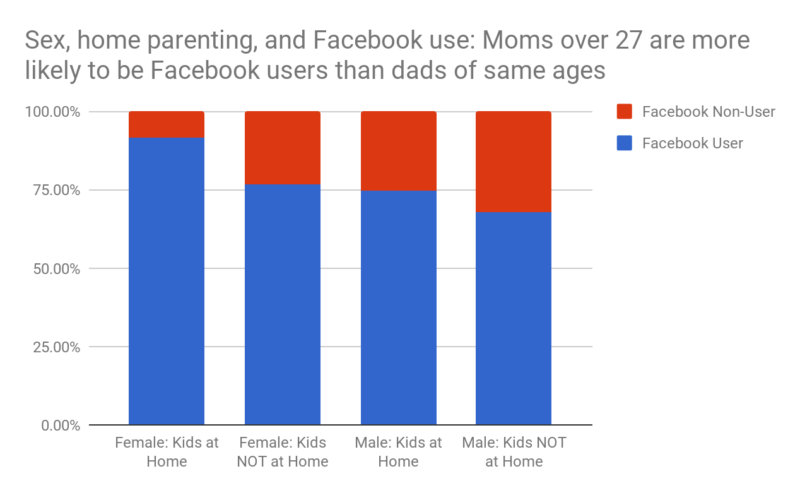
What we mean to say by this is that the needs (mostly) and the whims (fewer and fewer, at least by specific weight compared to the mass of needs) are those of ordinary, hard-working, essential members of society: the mothers that weave and keep together the fabric of society. According to the Pew Internet 2016 study on social media, women between 24-55 are the single largest user group on Facebook, representing 29% of Facebook users. Of these, half are moms. More important, being a mom with kids at home is a very strong predictor for being a Facebook user. A staggering 92% of women over 27, the average age for having the first baby, with kids at home are Facebook users. A much lower proportion of men over 27 with kids at home, 75%, are likely to be Facebook users. In fact, men with kids at home are barely catching up with women without kids at home in terms of using Facebook.
Click here to read the rest of the article, initially published in collaboration with Babi Patrikakis in the TCSN newsletter