What does the Coast Guard do? It protects the coast. Not. Add: the Coast Guard is not a police force. It is not a maritime DMV. It is not a federal bureaucracy.
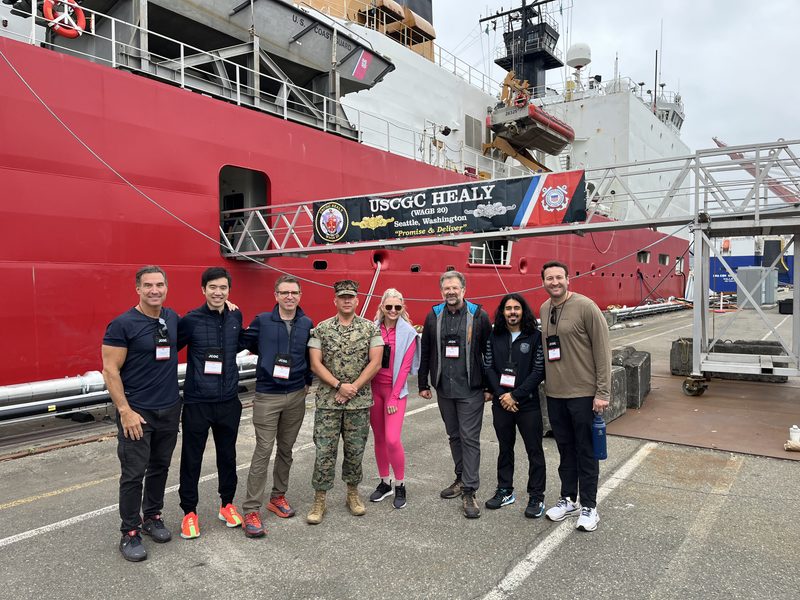
It is not easy to define the United States Coast Guard (USCG) if you want to avoid stereotypes. But let us not define it by negation. Let us look at what the Coast Guard does, at least as I understood it after visiting the Seattle command as part of the Joint Civilian Orientation Conference, organized by the Department of War for U.S. civilian leaders interested in understanding and speaking about defense in an informed way.
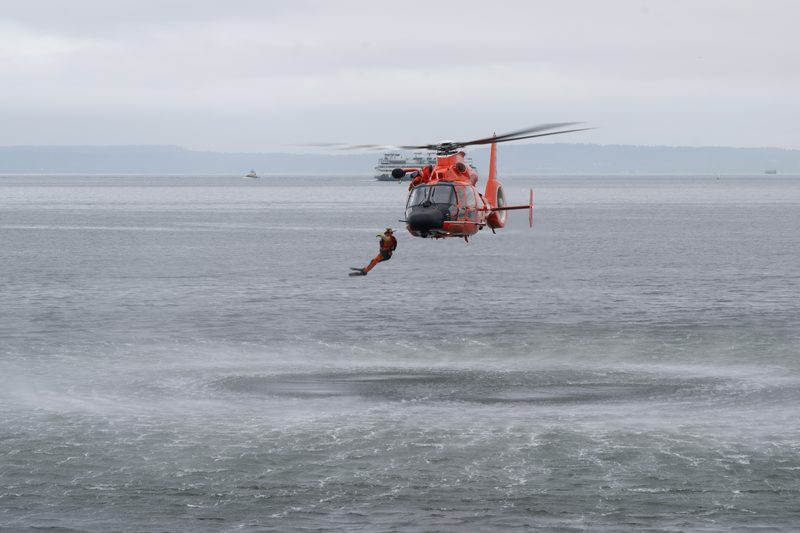
The Coast Guard is a military organization tasked with protecting the waterways and maritime territories along the United States’ borders. In times of peace, it prevents and protects against dangers of a tamer kind, such as drug dealing, smuggling, or the occasional “breaking the peace” of the seas by operating too close to vital U.S. economic interests. Securing orderly traffic and preventing major accidents are also the Coast Guard’s job. However, the Coast Guard exists not only to prevent illegal fishing and stop narco-boats. The Coast Guard is there to protect our shores from more insidious dangers that accumulate over time and go unnoticed until they make their presence felt with full force, unexpectedly. In times of war, it could be part of active military operations. In World War II, the USCG hunted Japanese and German submarines, for example.
Right now, the Coast Guard plays a vital role in protecting U.S. interests in the Arctic and Antarctic regions. Although the number of nations directly bordering the Arctic Ocean surrounding the North Pole is limited, great powers whose shores are washed by much warmer seas have declared the Arctic an area of vital interest. They send constant patrols, some civilian, some military, into the area, taking advantage of the high-seas nature of this maritime territory. Like many other regions where presence is a form of asserting nominal, if not real, rights, the Arctic is about to become a contested territory.
A deteriorating international climate in which small gestures can lead to dramatic consequences demands wise and careful monitoring of the Arctic and the assertion of rights. The United States has legitimate claims over the continental shelf stretching for hundreds of miles north of Alaska. Yet those waters are hard to navigate and even harder to control. More importantly, open military control would lead to a spiraling arms race in a sensitive area, with consequences that are hard to fathom.
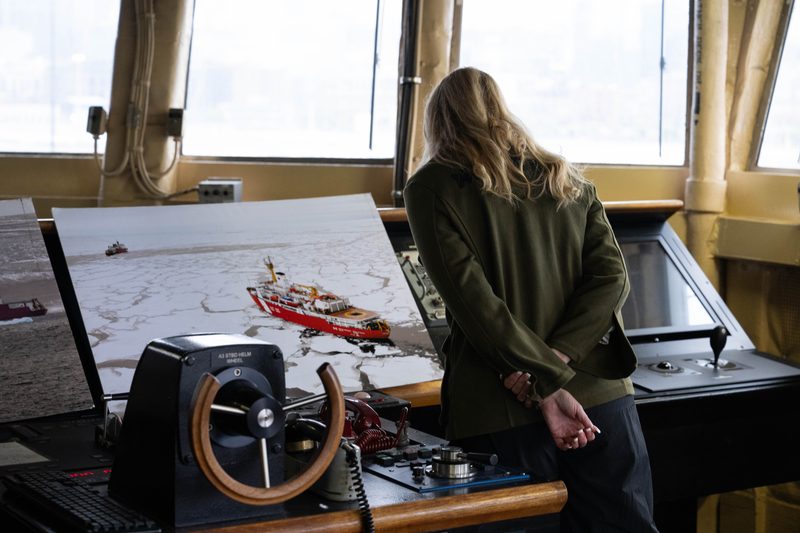
The Coast Guard, however, has a legitimate reason to patrol the area. More importantly, its mission has always been closely aligned with national scientific efforts. This is why the Coast Guard has been funded by Congress, with support from the White House, to build a new fleet of icebreakers whose job is dual: to protect and to explore.
While in Seattle, we visited one of the old icebreakers, a modest ship in appearance but built as sturdy as a mule and as smart as a beagle (could not resist the metaphor; I am a beagle owner). We learned that it has more high-tech gear on it than many spaceships and more scientific sensors than a spy satellite, all in the service of understanding and taming the Arctic for peaceful use.
A lingering question, however, remained after we got off board that ship. There is much to do in the Arctic, indeed, but what is the final, real, tangible payoff? I found the answer to this question at the end of the trip, at the Coast Guard base, when we visited the command center monitoring Puget Sound: a room filled with computer monitors depicting the same map of the sound in multiple variants, one for each type of use, from weather and air traffic to water flows and ship lanes. There was even a monitor to visualize and report cetacean passage. That is, whale watching of the scientific kind.
Trying to make sense of it, I asked what this was all about in a few words. One of our hosts put it simply: “separating the lanes.” What does the Coast Guard do, then? It keeps things moving smoothly and firmly, blending science with security, while ensuring that lanes that don’t need to cross don’t. I can’t think of a more gloriously and elegantly peaceful and martial service at the same time.
- Separating the Lanes: What Does the Coast Guard Do?
- Live in the Desert, Fight in the Air: What I Learned from a Nevada Cincinnatus
- When All Fails, Hit the Bone: What I Learned from the Military Doctors
- Found in the Fog of Combat: Confusion is in the eye of the beholder
- Do Look Down! What I learned from the Marines