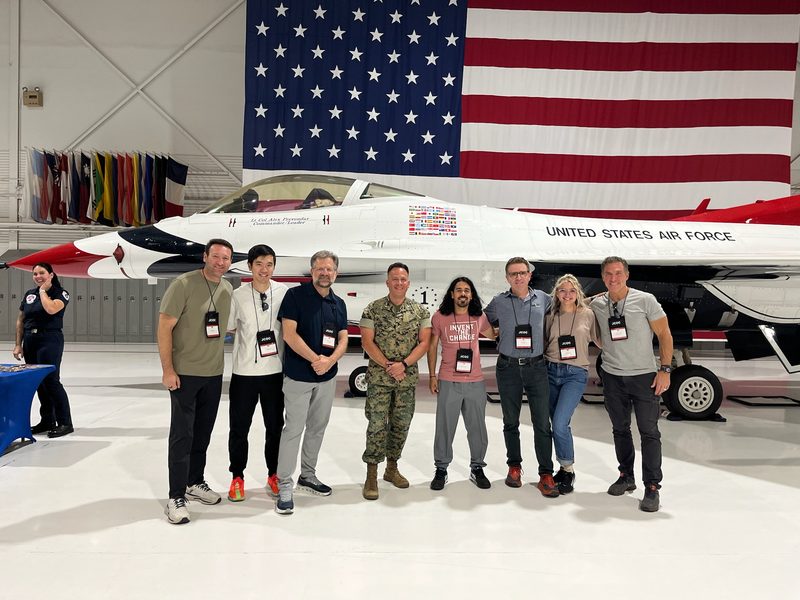
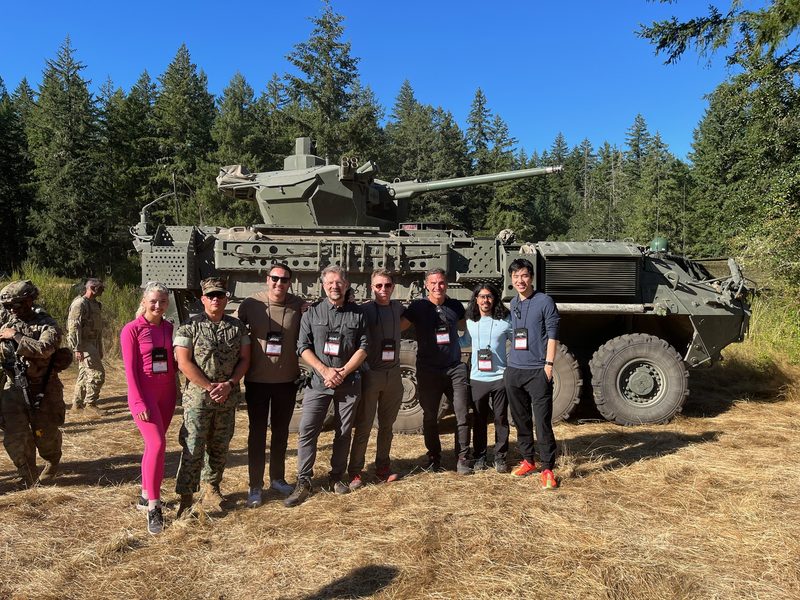
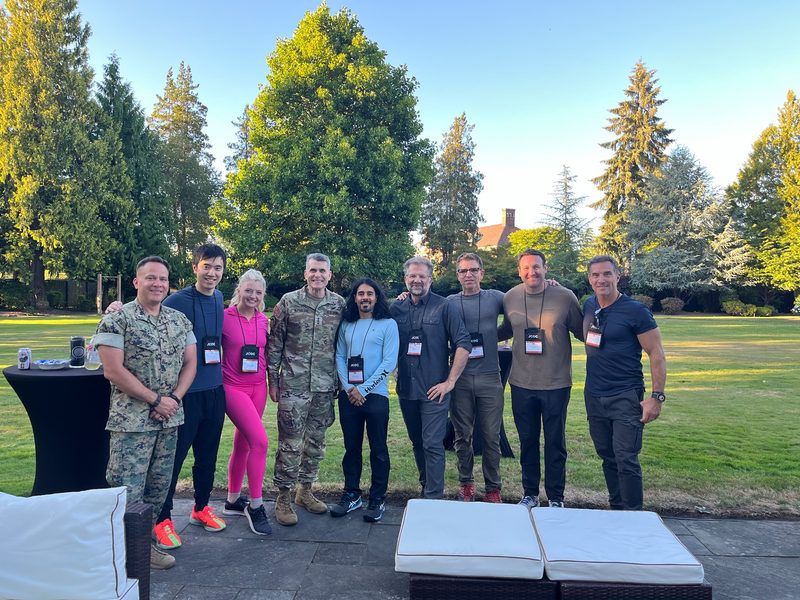
Aristotle said it first: “Humans are social animals.” But the military, especially the American military, put this philosophical principle to use. The military does not teach you, as a long-abandoned recruitment slogan tried to convince our youth twenty years ago, to be “An Army of One.” The military teaches—and is premised on—the core idea that you “Fight as One.” Each soldier, sailor, airman, space guardian, Marine, or Coast Guard member is part of an organism. Each is vital to the whole; however, without the whole body, each will cease to exist. The whole is not, however, a mindless creature. It is a form of “civilization.” I realized this while reflecting on how, under the guidance of a skilled Marine officer, my small group of seven civilian colleagues participating in the Joint Civilian Orientation Conference became a team without realizing it. This is how it happened…
Take a CEO of a multibillion-dollar company who flies his own jet from San Francisco to New York City. Add a marketing genius. Mix in the manager of a very large private-equity fund, a tech maven, another professional investor, an engineer with a passion for STEM education who introduces preschoolers to engineering through coloring books (he also trains as a Ninja), the VP of a company that organizes the largest car race in the United States, and a community leader from Nebraska who believes that human well-being and economic growth can support each other. Ah, and I should not forget the seventy-year-old Hollywood movie line producer who occasionally trains at the same gym in Venice, Los Angeles where Arnie and his bodyguard go (that Arnie!). And of course, me: a wayward academic with a penchant for speaking out loud, in random ways, about random things. How do you turn them into a team? Here comes Eric, our leader, a reserve Marine Corps lieutenant colonel and police commander in civilian life.
But before I disclose the secret of “man’s red fire,” as King Louie in The Jungle Book called the human essence, indulge me while I say a few words about what it means to be human. After all, I wouldn’t be an academic if I did not frame what I had to say within a general idea. This is simple: humans need both individualism and predictable order, and teams thrive by embedding the former in the latter.
Although humans crave individualism and worship the ideals of self-reliance, outspokenness, and freedom of thought and action, they do their best when they extend these abilities through others. Being the aforementioned “social animal” does not mean that you should be a drone in a hive, an ant, or a wildebeest in a herd. In fact, when Aristotle called us “social,” he did not even use the word “social” in the way we understand it today: gregarious or flocking together. He used the term “politikon,” as in “zoon politikon.” The literal translation would be “humans are creatures of the polis.” Yet he did not say that we are, by birth, “political animals,” but “civilized” or “of the city.” (“City” comes from the Latin “civitas,” which is identical to “polis.”) In Roman and Greek antiquity, polis was more than a settlement; it was a form, or THE form, of organized society. A polis, or civitas, was a city-state with laws, customs, traditions, rituals, institutions, gods, freedoms, privileges, and boundaries. A “political animal” is a civilized (of a city) creature that willingly belongs to a structured group. The will to belong comes from the realization that without the ties that bind us to others—religion, customs, laws, institutions, freedom, or self-reliance—the very idea of being an individual means nothing. A man or woman alone in the jungle is as free as their heart desires. The forest, however, does not care about their individual rights. It will sting, bite, and eat them in the blink of an eye, and not even a leaf will flutter in their memory. In a city, or polis, every person is protected and supported by the surrounding civilization. Through it, he or she becomes civilized and capable of thriving.
Returning to my point about the role military organization plays in turning disparate humans into teams, my claim is that the military does more than regiment or train; it “civilizes” humans by imprinting them with a full set of customs, rituals, rights, obligations, roles, rules, and so on. A military organization is a whole society; it is its own “polity.” To be “civilized” by such a polity, you need to accept its rules.
Our Marine Corps leader did not have much time to “civilize” us as Marines. He did have enough time, however, to demonstrate that even the simplest techniques and rules can bring together people from very different backgrounds, producing at least a modicum of esprit de corps and a desire to work with one another because of their differences.
The first rule: treat everyone the same. Strip them of their former self-important sense of rank, privilege, and even worth. This is not at all demeaning or condescending. It means that in a team meant to work together, everyone should pull their weight. Use the same name, call people out equally for what they did or did not do (such as showing up late for meetings), and, most importantly, show equal care and concern for each other. Our leader constantly counted and recounted us, making sure that all the chicks were in the flock and that everyone had a chance to take a bathroom break, eat, or get a swag shirt.
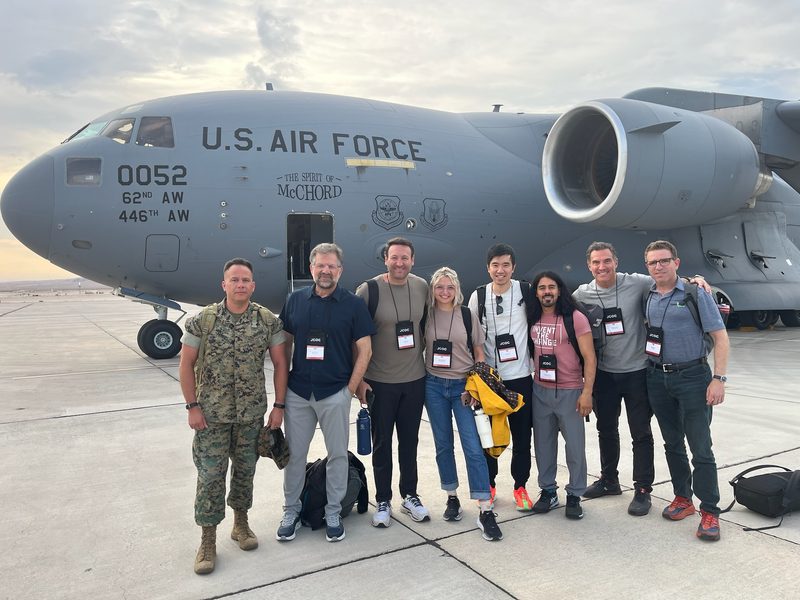
The second rule, and most important, is to make sure people listen to what you have to say. In our little expedition, we traveled a lot—about 1,200 miles in five days—by cargo planes, helicopters, noisy buses, and, at times, on foot, surrounded by distractions: this building, that plane, or this formation of soldiers marching in lockstep carrying huge backpacks. Guiding 8-year-olds through this maze of attractions would have been easier than herding men and women between 30 and 70. Yet Eric did it very simply. First, he called us “Marines.” He did not have to, but we liked it. Second, he taught us that when he said “Ears” in a command tone that could raise the dead, we answered, “Open.” Third, he communicated simply and directly: “Here is what we do, and this is why we do it.” In less noisy spots, and if we had a bit of time, he told us a short but instructive story of the “there was a guy or gal…” kind.
We also spent our off-schedule time having dinner together or chatting. No one took off to explore the city or the hotel for individual pleasure. This gave us the opportunity to discover the wealth of knowledge, experience, and quirky talents of our little tribe. The pilot CEO was also a mentalist. A very good one. He could guess the name of the person you first kissed. I kid you not. The Hollywood producer knows—and will make a movie about—the unlikely team of Iraqi boxers put together by an LA trainer who heard the call as if in a dream. The private-fund manager’s family escaped by the skin of their teeth from Communism. I remembered and told the story of my military service in a regiment that used, as late as 1984, wooden-spoked howitzers bought by the second-to-last king of Romania before World War II. Teams are made of individuals, and individuals can only be recognized by their stories.
Finally, our Marine leader showed us that he cared about us as individual members of HIS team. He cared because he wanted to be the best team leader he could be. It was both a matter of personal pride and of brand recognition. A Marine leader always cares about his or her team. Eric insisted that we should “give him one” by responding with the Marine Corps answer, “Oo-rah.” Initially, we felt and sounded a bit self-conscious, if not fake. After all, we had not just pushed the Japanese into the sea at Guadalcanal. But he made us understand that when in Rome, you do as the Romans do.
The forty participants in the JCOC experience were divided into multiple teams. Ours was just one of them. There were Navy, Army, Coast Guard, and Air Force teams, each with its leader and its mini-culture, invented or cultivated over five days. Each came together in no time, using local rituals, rules, and interaction styles defined by its leader. These varied, but the result was always the same. Treating humans like “social” animals brings out the best in them. It “civilizes” them.
- The Military as a “Civilization”: How to Make a Team from Anything
- The Mind – Body Problem Does Not Exist: What I Learned from the SEALs
- Separating the Lanes: What Does the Coast Guard Do?
- Live in the Desert, Fight in the Air: What I Learned from a Nevada Cincinnatus
- When All Fails, Hit the Bone: What I Learned from the Military Doctors
- Found in the Fog of Combat: Confusion is in the eye of the beholder
- Do Look Down! What I learned from the Marines