At the height of the space exploration era, General Vandenberg was a demi-god on a par with his civilian peers: Wernher von Braun, the creator of the Saturn V rocket that carried Apollo astronauts to the Moon; Robert Gilruth, the originator of America’s human spaceflight program and first director of the Manned Spacecraft Center in Houston; James Webb, the NASA administrator who made Apollo into a national enterprise and whose name now graces a famous space telescope; or Christopher C. Kraft, the architect of Mission Control. General Vandenberg was responsible for formalizing missile and launch operations as soon as the United States had a missile force worth the name. Once his name was associated with the California coastal base north of Santa Barbara, he became a household name.
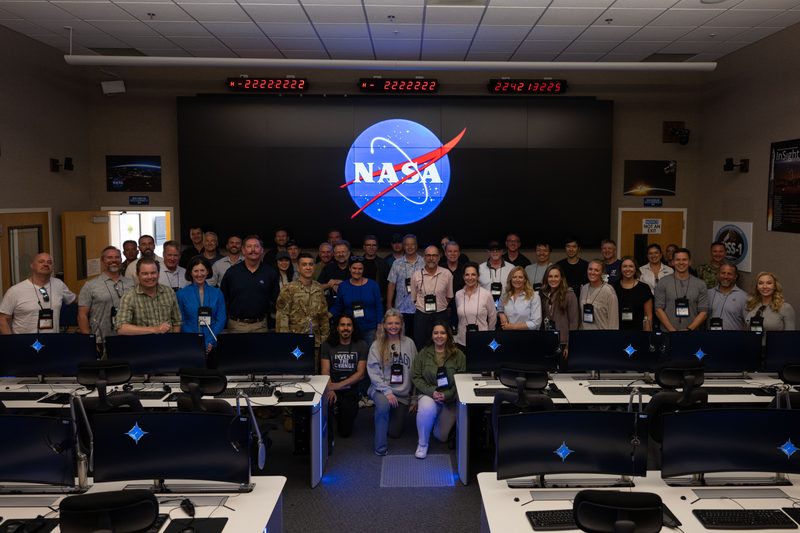
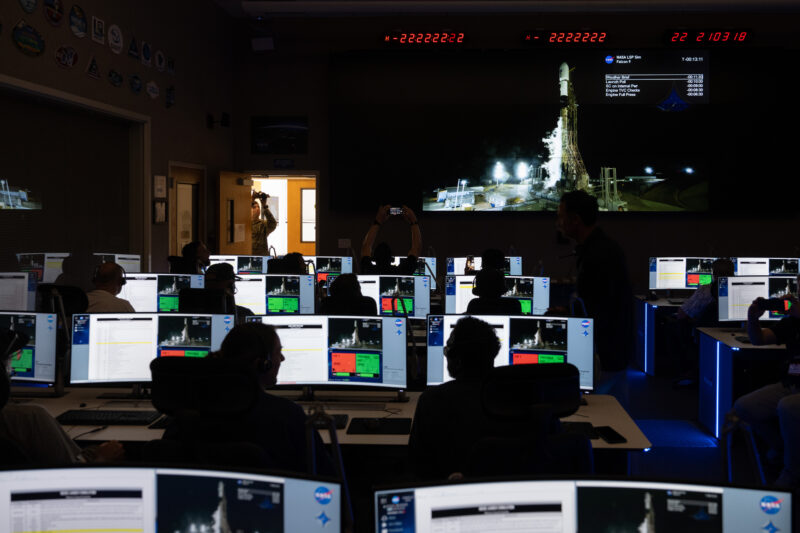
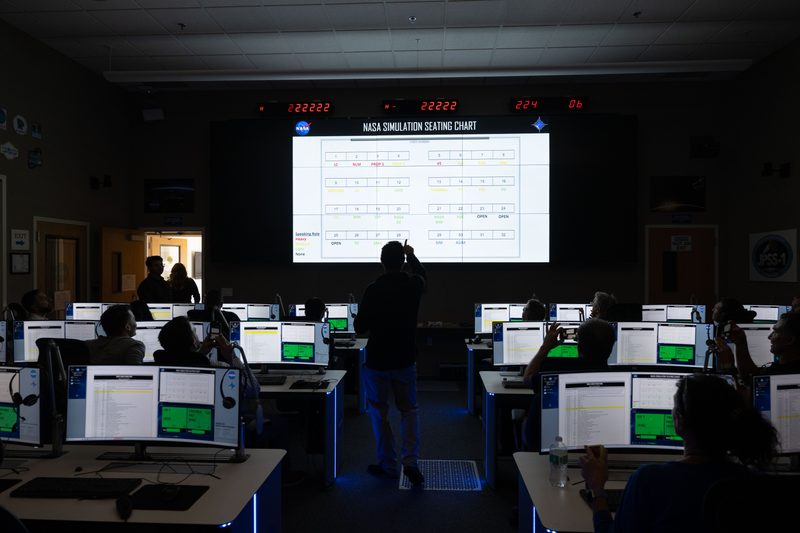
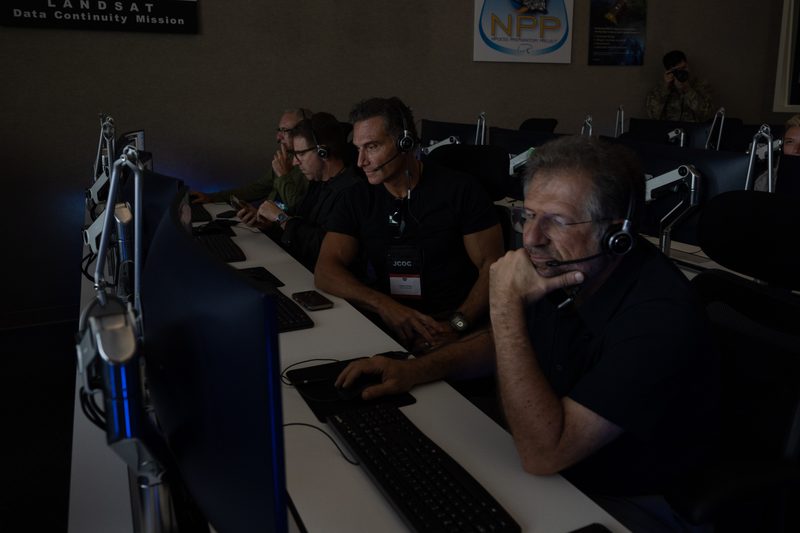
Yet few of our younger Americans recognize the name anymore. For them, Vandenberg has become a rarely mentioned military base with a bureaucratic mission and destiny. Visiting the base as a participant in the Joint Civilian Orientation Conference organized by the Department of War to introduce civilian leaders to the ways and goals of contemporary American military, I rediscovered the magic of space exploration, a story that needs to be told and retold over and over again. The visit was a highlight of the trip for me, since my participation was facilitated by the SPACECOM leadership, including its leader, General Stephen Whiting.
Few of our contemporaries truly understand that the mission of the American military combines defense, warfighting, and technological prowess with innovative ways to collaborate, innovate, and promote the American spirit across domains, including civilian ones, ranging from scientific innovation to human performance. Nowhere else can these multiple facets of America’s leadership, civilian and military, shine better than at Vandenberg. A huge installation, covering about 155 square miles, the base is a string of launchpads and space-oriented launch and testing facilities that bring together the smarts and technological brawn of military and civilian space exploration.
Vandenberg is one of the spaceports that made the resurgence of American space dominance possible. SpaceX, United Launch Alliance, Firefly Aerospace, and Northrop Grumman, among other commercial enterprises, collaborate with the Space Force to test and launch the next generation of cheaper and more flexible rockets that help ensure U.S. dominance in space. For a while, during the 2000s and 2010s, the United States seemed to lose some of its earlier launch momentum. China overtook the United States in annual orbital launch count in 2018 and again in 2019. The balance of power changed dramatically in the 2020s, when SpaceX conducted many of its launches from Vandenberg’s Space Launch Complexes, and it accelerated after the commercial launch market matured around reusable rockets. Since the first SpaceX launch from Vandenberg on September 29, 2013, the company has used the base to send hundreds of payloads into polar and sun-synchronous orbits, including large batches of Starlink satellites. More importantly, considering all launches from all sites, the U.S. launch cadence has surged in the 2020s, led by private providers, while China has remained the second-largest launch power. This could not have been possible without military support and executive leadership. The establishment of the Space Force guarantees a continuing, productive relationship that will ensure a long-term strategic advantage for the United States.
The numbers tell the story more sharply. In 2018, China led the world with about 39 orbital launch attempts, while the United States recorded about 34; by 2024, the pattern had reversed dramatically, with the United States reaching roughly 145 orbital launches compared with China’s 68. Over the last five completed years, the United States moved from near parity to clear numerical dominance: about 44 U.S. launches versus 39 Chinese launches in 2020; 51 versus 55 in 2021; 87 versus 64 in 2022; 116 versus 67 in 2023; and 145 versus 68 in 2024. The same expansion appears in spacecraft and payload deployment: Space Foundation reported more than 2,800 satellites deployed globally in 2023, with SpaceX deployments accounting for most commercial payloads, while BryceTech’s smallsat series recorded 2,860 smallsats launched in 2023 and 164 of 221 orbital launches carrying smallsats. Source: BryceTech Smallsats by the Numbers 2024.
| Year | China orbital launches | U.S. orbital launches | U.S. smallsats launched | Chinese smallsats launched | Vehicle/payload context |
|---|---|---|---|---|---|
| 2018 | ?39 | ?34 | ?250 | ?85 | China briefly led in launch count, but U.S. commercial operators already accounted for the larger smallsat share. |
| 2020 | 39 | 44 | ?1,050 | ?120 | Starlink deployments pushed the U.S. count sharply upward, even while national launch totals stayed close. |
| 2021 | 55 | 51 | ?1,450 | ?175 | China briefly exceeded the United States in launches, but the U.S. continued to dominate smallsat deployment volume. |
| 2022 | 64 | 87 | ?1,850 | ?210 | BryceTech recorded 2,402 smallsats launched globally in 2022 and 109 of 186 orbital launches carrying smallsats. |
| 2023 | 67 | 116 | ?2,300 | ?250 | BryceTech counted 2,860 smallsats launched globally in 2023, equal to 97% of all spacecraft launched; 164 of 221 orbital launches carried smallsats. |
| 2024 | 68 | 145 | ?2,150 | ?320 | BryceTech reported about 2,790 smallsats launched in 2024; the U.S. remained dominant, while China’s share continued to grow. |
| Total for years shown | ?332 | ?477 | ?9,050 | ?1,160 | Totals include 2018 plus 2020–2024; smallsat totals are approximate. |
Note: smallsat counts are approximate because public annual summaries report global totals directly, while country-level U.S.–China splits are commonly derived from BryceTech country/operator charts and can vary by whether the count is based on operator nationality, manufacturer, launch site, or spacecraft registry.
I learned all these details after visiting Vandenberg. While on base, however, I could see firsthand how the launchpads and mission control centers were focused on dual civilian and military missions seamlessly. The discussions focused on space advantage as a continuing effort by all Americans to come together around a common goal. This became even clearer when visiting one of the NASA payload preparation facilities, where satellites, military or civilian, are prepared for final mounting on rockets for launch into space. Besides size and complexity, the facility strikes the visitor with the spirit of innovation and exploratory enthusiasm. For example, besides a gigantic “clean hangar” in which the air is pumped out and filtered to reduce the number of dust specks by a factor of 1,000, from 100,000 particles per cubic foot to 100 particles per cubic foot, there were the homey, incredibly funny, yet innovative, converted RVs that could serve as field mission command centers. In them I could see combined the Conestoga wagons of the early frontiersmen on the Oregon Trail with the Star Trek Enterprise spirit.
Nowhere else on the JCOC trip did I experience the same combination of old and new, the mix of grounded experience and unbounded possibilities, of governmental responsibility and entrepreneurial innovativeness as I did at Vandenberg. May its name become a recognized household brand in the American public culture again.
Read the rest of the posts dedicated to military leadership principles applicable to civilian life, facilitated by my participation in the Joint Civilian Orientation Conference:
- Ask Not “Who,” but “What” Is Vandenberg: Space Starts at the Horizon
- The Military as a “Civilization”: How to Make a Team from Anything
- The Mind – Body Problem Does Not Exist: What I Learned from the SEALs
- Separating the Lanes: What Does the Coast Guard Do?
- Live in the Desert, Fight in the Air: What I Learned from a Nevada Cincinnatus
- When All Fails, Hit the Bone: What I Learned from the Military Doctors
- Found in the Fog of Combat: Confusion is in the eye of the beholder
- Do Look Down! What I learned from the Marines